
The most complex miles.
What special education transportation really costs, why these routes are the hardest to build, and how the rules are changing.
Seven things every district leader should know about the cost of special education transportation
Special education transportation is the most expensive, most regulated and least visible service most districts run. The accommodations are set by law, somebody still has to build a route that honors them, the bill lands in the general fund, and every one of those miles is ridden by a child who can least afford a long trip.
The students on these routes can least afford to lose the time.
Before one Arizona district rebuilt its routes, special education pickups started at 6:00 a.m. for a 7:30 a.m. bell.1 In California, 27.7% of students with disabilities were chronically absent in 2024-25.2
These are the most expensive miles you run.
Massachusetts paid $13,825 to transport a special education rider in fiscal 2024, against $1,045 for everyone else.3 In Minneapolis, 8% of riders accounted for 45% of transportation spending in 2022-23.4
The cost lives in the outliers.
In the median Massachusetts district, 17 out-of-district riders consume 49% of special education transportation spending.3 One New Hampshire district pays $160,000 a year to transport a single placement.5
The accommodations are set by law. The route still has to be built around them.
An IEP team decides who rides, how, with what equipment and with whom. Chicago Public Schools averages 6.9 students on each route built for students with IEPs.6
The rules are moving in two directions at once.
States are widening what counts as transportation and who must get it.789 At the same time Minnesota cut its reimbursement from 100% to 90% and Massachusetts paid 61% instead of 75%.103
- 00The short version
- 01Who rides, and what the ride costs them
- 02The bill
- 03Why these routes are so hard to build
- 04The board table
- 05The rulebook, and how to get the money back
- 06The director who cut 16 contracts to five
- 07What works, from inside the routing office
- 08The playbook
- 09Talk to us
This is the short edition. The full record behind it is in two companion pieces: The rulebook, 2025-26 and The record: the ride, the board table and the routing office.

Who rides the most complex miles, and what the ride costs them
More students every year, on more vehicles, no federal count of how many ride, and an hour of a child's morning before it is a line in the budget.
7.5 million students received special education services under IDEA in 2022-23, 15% of public school enrollment and the highest share on record.14 How many of them ride under an IEP is a question the federal government stopped answering 25 years ago; the last national study, from 1999-2000, found 14% received specialized transportation.15 What exists instead is the industry's own read: in School Bus Fleet's 2026 survey, 22% of riders on the average fleet have special needs and 24% of vehicles are now used primarily for special needs transportation, up from 15% a year earlier.1611
Allen ISD, north of Dallas, moves about 450 students with transportation written into their IEPs every day, and its director, Karol Day, told the TSD Conference in November 2026 that the count keeps rising while overall enrollment falls: "We're all constantly asked to cut budgets, but still keep doing what we're doing successfully."17 Rockwall ISD runs 28 special education routes; Garland ISD runs 77 for 1,100 students.18 The same routing office carries a second federal obligation that behaves the same way: 1.55 million students experiencing homelessness, up 28% in two years, have a right under McKinney-Vento to a ride to their school of origin, and one in five of them also has an IEP.1920
The students who need the hours most lose the most of them
Special education pickups at Balsz Elementary in Phoenix before the district rebuilt its routes in 2026. Some students left class before the day ended to make the afternoon run.1
Monterey County Office of Education, August 2026, after three of its 13 drivers left. The districts that send students to its programs were told to find another way to get them to school.22
Students with disabilities in 2024-25, against 19.4% of all California students. Among homeless youth the rate was 34.9%.2
A long ride is not a neutral event for a student whose IEP exists because the school day is hard. At Balsz, the district team told the BusRight Solutions team that the early pickups were producing more behaviors on the bus, and that the behaviors came into the building with the student.1 We could not find a single state that publishes how long students with IEPs ride or how often their bus is late. Reimbursement rates are reported to the dollar; the minutes a child spends on the bus are not reported at all.
The law gives the people making these calls no out. Julie Weatherly, a special education attorney with 40 years in the field, told the TSD Conference in November 2026 that the absence of a driver, an aide or a nurse generally does not remove a district's obligation to provide a required service, and warned against basing decisions on staffing, scheduling or administrative convenience instead of the student's documented needs.23 Tennessee's education department told its districts the same thing in 2023: "The IDEA does not have any provisions that alter FAPE requirements during widespread staffing shortages."24 The shortage is real. The obligation does not bend to it, which is why the fix has to come from the route.
The long version of this chapter, with the riders' own accounts, the Schenectady cautionary tale, the Chicago board's 2022 vote and the McKinney-Vento liaisons, is in The record.
At the end of the day it is transportation for special education students. If parents choose to select transportation, we're required to provide it. But now we're down three routes.Monterey County Office of EducationTo the county board after three of its 13 drivers left in one summerAug. 202622

students experiencing homelessness also has an IEP. Both the IEP and McKinney-Vento status give the student a right to transportation, and that right follows them across district lines.

10 to 13 times the cost of a general education seat
A 2026 state audit and a year of board budgets put numbers on what directors have known for years.
The most complete recent study is the Massachusetts Inspector General's, published in February 2026. In fiscal 2024 the state's districts transported 61,996 special education riders at an average of $13,825 each and 434,888 general education riders at $1,045 each.3 The federal government's last national estimate, from 1999-2000, found the same 10 to one ratio.15 The ratio has not moved in 25 years. The dollars have: Minnesota's statewide special education transportation bill grew 84% in a decade while riders grew 19%.25
The cost lives in the outliers
The Massachusetts data explains why the average hides the problem. The median district transports 57 special education students, 17 of them to programs outside the district. Those 17 consume 49% of its special education transportation spending.3 Hampton, New Hampshire pays $160,000 a year to transport one placement.5 Then there is the procurement problem: 53% of Massachusetts districts received zero or one bid for their special education transportation contract.3
Before the next budget cycle, list your out-of-district riders by destination and vehicle. If fewer than a third of your special education riders are producing half the cost, the fix is in the outliers, not the fleet.

Why these routes are so hard to build
Every constraint on a general education route applies, plus six more that are written into a legal document the router never sees.
Average on Chicago Public Schools' routes for students with IEPs, October 2023, across more than 1,000 routes.6
59 of those routes carried one child, and roughly three in four carried 10 or fewer. The district's explanation: "distance, medical equipment, and/or required bus aides that will require less students in the vehicle."6
What one Washington district's labor contract adds for each wheelchair stop, plus a minute each for a safety vest or car seat. A California district adds up to 20 minutes at two schools for traffic and wheelchair loading.1
Under IDEA, transportation is a related service, the IEP team decides whether a student needs it and in what form, federal guidance has said since 2009 that many students with disabilities can ride the same bus as everyone else, and federal guidance is silent on how long a ride may be.2627 That is the whole federal rulebook. Everything else is decided student by student, in a meeting the transportation department is rarely invited to, and arrives in the routing office as a form. New Jersey directors "never see the IEP itself."1
A general education route is a chain of corner stops with 50 students aboard. A special education route is a chain of houses: 72% to 90% of special needs stops are school-to-home.2111 The words matter too. A transportation director in Iowa warned the BusRight Solutions team that "door to door" in her state can be read to mean the driver leaves the bus and brings the student out, and that a lawsuit had turned on exactly that. Write "curb to curb" unless the IEP says otherwise.1
Ask your special education office for three fields per student, every semester, in a spreadsheet: equipment, aide requirement, and the stop type the IEP actually says. Most routing disasters start with one of those three being wrong on day one.
The state attendant rules, the calendar problem and the privacy problem with McKinney-Vento stops on a parent map are in The record.
| Door to door | The stop is the home. Chains of single-house stops put a ceiling on students per bus, and skipping a no-show means circling back later.16 |
| Equipment | Wheelchair lifts, harnesses, car seats, buckle guards. A wheelchair bus has fewer seats, and a last-minute bus swap has to respect the lift.26 |
| People | An aide, sometimes a nurse, sometimes one aide per student. New York requires attendants to pass a physical performance test every two years and to be CPR-certified when the IEP calls for it.28 |
| Time | Illinois says "every effort should be made" to keep rides to no more than an hour each way; Massachusetts caps rides at an hour unless the IEP team approves longer.2930 |
| Destination | Out-of-district programs, non-public schools and county classrooms, on calendars that do not match yours.31 |
| Change | IEPs are written all year. Mid-year placements, new move-ins and extended school year each reopen the routes.3233 |

a year to transport one out-of-district placement in Hampton, New Hampshire, a district with four in-district buses. "And that's just the transportation."

Board minutes from 2025 and 2026 show the same two decisions in every region
Contract it out or bring it back, and who fills the aide seat. Every example is a real meeting, with a date.
Contract it out, or bring it back
Riverside Local in Ohio found 16 students on private van contracts at up to $320 per student per day and cut the count to five in a year with district vans, sibling discounts and parent contracts.3413 East Windsor, Connecticut replaced a contract of about $100,000 a year with a district van driven by staff who already know the students and saved "just over $50,000."35 Nationally, 45% of districts use an alternative transportation provider, down from 56% a year earlier.36 The reasons are not only cost. A transportation director in one BusRight district told the BusRight Solutions team this fall that her vendor sends a different driver most days and the drivers and her students often cannot talk to each other, so a long ride is a long ride with a stranger.1
Neither direction ends the district's responsibility. At the TSD Conference in November 2026, Tennessee's state director of student transportation, Joshua Hinerman, said the district stays accountable for a student's safety when a contractor drives, and Kenny Mulder, who runs about 60 alternative transportation routes through four companies for the Special School District of St. Louis, described RFPs that require driver licensing, motor vehicle record checks and criminal background checks.37 Launi Harden, a retired Utah transportation director who now runs Florida's pupil transportation association, put the standard in one line: "You don't lower your standards when you bring a partner in."17
The aide seat is the hardest to fill
Chester County, South Carolina runs 114 routes with five special needs attendants. Its director asked the board for one more because "when we have absence, we don't have a spare person to put on those special needs buses... it's becoming more challenging and challenging for me to determine who can do without an attendant on that particular run."12 Nationally, 72% of operators report the driver shortage affecting their special needs routes, and nearly two thirds now staff an aide on every special needs bus.1116 A Laramie, Wyoming paraeducator put the competition in one line: "We are losing people to Burger King."38
The other question is whether every seat needs filling. Patrick Mulick, the autism coordinator for Washington's Auburn School District, opened the 2026 TSD Conference on what he called an over-reliance on 1:1 adults: "If there is no plan to remove the training wheels, then you are only training the child to be dependent on them."39 The research behind him is 15 years old and is about classrooms, not buses. Michael Giangreco at the University of Vermont found that one-to-one paraprofessional support, an increasingly common model, brings unnecessary dependence, stigma and less contact with peers, and argued that it should be treated as one of the most restrictive supports a team can choose and assigned with a plan to fade it.40 Glenna Wright-Gallo, who ran the federal special education office until 2025, made the routing version of the point in Frisco: an IEP that says only "special transportation" gives the router nothing to work with, and should be reviewed to see whether the student can move to a conventional bus.17 An aide written into an IEP is an accommodation and stays until the team changes it. The team can ask the question.
The mid-year surprises, the ride-time and accountability cases, the full contractor record, the aide-hiring ideas and the McKinney-Vento budget items are in The record.

The rules are getting more inclusive. The money is not keeping up.
What changed in 2025 and 2026, and where each reimbursement program lives.
IDEA has not changed. What has changed is everything around it: what vehicles a district may use, who may drive them, what the state will pay back, and in Illinois, who is presumed to need a ride at all. In May 2025 the National Congress on School Transportation adopted a new "Alternative Transportation" section of the national specifications, stating that school buses "should always be considered the first means of transportation when feasible."9 Illinois House Bill 5575 would make free transportation presumptive for every student with an IEP.7 The vehicle rules are loosening, the documentation rules are tightening, and the reimbursement is shrinking in the states that pay the most.
The full state-by-state table, with California, Louisiana, Washington, Ohio, Colorado and the federal cases, is in The rulebook, 2025-26.
| Where | What changed | What it means for routing |
|---|---|---|
| Illinois | HB 5575 (2026, pending) would make free transportation presumptive for every student with an IEP. ISBE's 2025 FAQ sets a one-hour-each-way goal.729 | More riders, documented ride times, and a 10-day clock on mileage records if it passes. |
| Virginia | Chapter 312 (2025): a two-year pilot letting divisions under 4,500 students contract for small vehicles (nine seats or fewer, or 11 to 15), rideshare or transit after a public hearing, with cost per mile reported.8 | A legal small-vehicle path for the one-student run, with a reporting burden attached. |
| Texas | HB 2 (2025): special education mileage rate $1.08 to $1.13; intensity tiers from 2026-27; statewide cap on extended school year funding removed.44 | Mileage records on special education routes are now worth more to get right. |
| Minnesota | Special education transportation reimbursement cut from 100% to 95% in FY26 and 90% from FY27.1045 | A district with $3 million in special education transportation absorbs $300,000 it did not budget. |
| Massachusetts | Circuit breaker transportation reimbursement fell from 75% to 61.36% for FY25; the Inspector General's 2026 study calls the state's reimbursement model "a national outlier."346 | Budget to the lower number and read the invoice line by line. |
| Supreme Court | A.J.T. v. Osseo Area Schools (June 2025, unanimous): students bringing ADA and Section 504 claims about their education no longer have to show "bad faith or gross misjudgment."47 | A transportation failure the district knew about and left alone faces the ordinary damages standard, not a higher one. |
| Head Start (proposed) | HHS proposed in August 2026 to rescind the federal Head Start transportation standards, including the requirement for a bus monitor on every Head Start vehicle, and leave both to state rules.4849 | Districts that run Head Start routes would decide the monitor question under state rules, with no federal floor. |
How to get the money back
A transportation director in a BusRight district told us this fall that she did not know how to apply for reimbursement on any of these programs. Most of the money below is claimed through a finance office report the transportation office never sees, and the fields that drive it come from routing.1 She had company at the TSD Conference in Frisco, Texas, in November 2026. Glenna Wright-Gallo, vice president of policy at Everway and the former assistant secretary who ran the federal special education office, told transportation directors there that districts read the law as a set of absolutes when "there's really a lot of flexibility and allowability in there," and has listed six funding streams beyond the pupil transportation budget that districts consistently leave unclaimed, Medicaid first among them.1750 Betty Ressel, a CPA with 30 years of district performance reviews behind her, put a number on the Medicaid line in the next session: districts of about 20,000 students generating as much as $500,000 a year in claims.51 Disclosure: BusRight sponsored Wright-Gallo's closing keynote on the same subject.
| Program | What it pays | How a district claims it |
|---|---|---|
| Medicaid school-based services (federal and state) | Specialized transportation on days a Medicaid-enrolled student with an IEP receives a Medicaid-covered IEP service, in a specially adapted vehicle (lift, ramp, harness). An aide alone or seat belts do not make a vehicle adapted; 504-only students and field trips are not covered.52 | Through your state Medicaid agency's school-based services program. In California that is the LEA Medi-Cal Billing Option Program, and since July 1, 2026 the medical need for each vehicle adaptation must be written into the IEP and kept in the audit file.53 |
| McKinney-Vento (federal) | Transportation to the school of origin is required. Districts pay from general or transportation funds; EHCY subgrants from the state coordinator can "defray the excess cost"; Title I, Part A set-aside funds may be used as a last resort. When two districts cannot agree, the cost is shared equally.20 | Ask your state's McKinney-Vento coordinator about the EHCY subgrant cycle, and your Title I director about the homeless set-aside. Keep a per-student record of miles and cost; it is the subgrant application.20 |
| IDEA Part B (federal) | Transportation is a related service under IDEA, including travel to and from school, between schools and specialized equipment, so Part B flow-through funds can pay for it.26 | Through the district's special education office and its annual IDEA application; transportation costs coded to special education are what the federal and state formulas see. |
| California: Home-to-School Transportation Reimbursement | 60% of the prior year's home-to-school transportation spending (Function 3600) minus the prior-year LCFF transportation add-on, special education included. Paid through the Principal Apportionment.54 | "There is no application process." Adopt a transportation services plan and update it by April 1 each year; report ridership, routes and miles in CBEDS each fall; code special education transportation to Goal 5xxx and Function 3600 so it counts.54 |
| Massachusetts: circuit breaker | Transportation for out-of-district special education placements, reimbursed at 61.36% for FY25 after years at 75%.3 | Through the annual circuit breaker claim filed with DESE by the business office; the Inspector General recommends itemized vendor invoices behind every claim.3 |
| Minnesota: special education aid | Special education transportation costs reimbursed at 95% for FY26 and 90% for FY27 and later within special education aid; the costs of transporting homeless pupils with disabilities carry their own line.45 | Reported with special education expenditures through the state's special education reporting system; the transportation office supplies the rider and mileage data.45 |
| Texas: transportation allotment | Special education mileage at $1.13 per mile under HB 2, with the statewide cap on extended school year funding removed.44 | Through TEA's annual route services report of eligible riders and miles; a special education route coded wrong is money left on the table.441 |
| New Jersey: transportation aid and aid in lieu | State transportation aid driven by the District Report of Transported Resident Students, with special needs mileage as the field the state audits most closely; aid in lieu of transportation is $1,177 per student for 2026-27.551 | DRTRS is filed each fall through the state's Homeroom portal and audited; one district paid a $40,000 penalty for a special education reporting error.1 |
| Washington: STARS and the special passenger safety net | The transportation allocation runs on STARS ridership and mileage reporting; the safety net for IEP, McKinney-Vento and foster care riders pays part of the cost above the allocation, and SB 5858 would write it into statute.5657 | STARS reports each fall and spring, and a separate safety net application in which special passenger costs are documented rider by rider.571 |
| Illinois: pupil transportation claim | About 55% of eligible special education transportation claims, down from nearly all.43 | The annual pupil transportation claim to ISBE.29 |
| Ohio: special education transportation | Reimbursed outside the main formula at a 37.5% to 41.67% state share for students impossible or impractical to transport by regular school bus.58 | Through the district's annual transportation cost report to the state, with special education transportation reported separately.58 |
| Arizona: transportation support level | State transportation support based on eligible riders and route miles reported at the 100th day.1 | The 100th-day transportation route report, with special education and McKinney-Vento riders counted on their own lines.1 |
If nobody in the transportation office knows which of these the district filed last year, the money is probably being under-claimed. Move 8 of the playbook is about keeping that data in one place; the BusRight Solutions team files these reports for districts that ask.
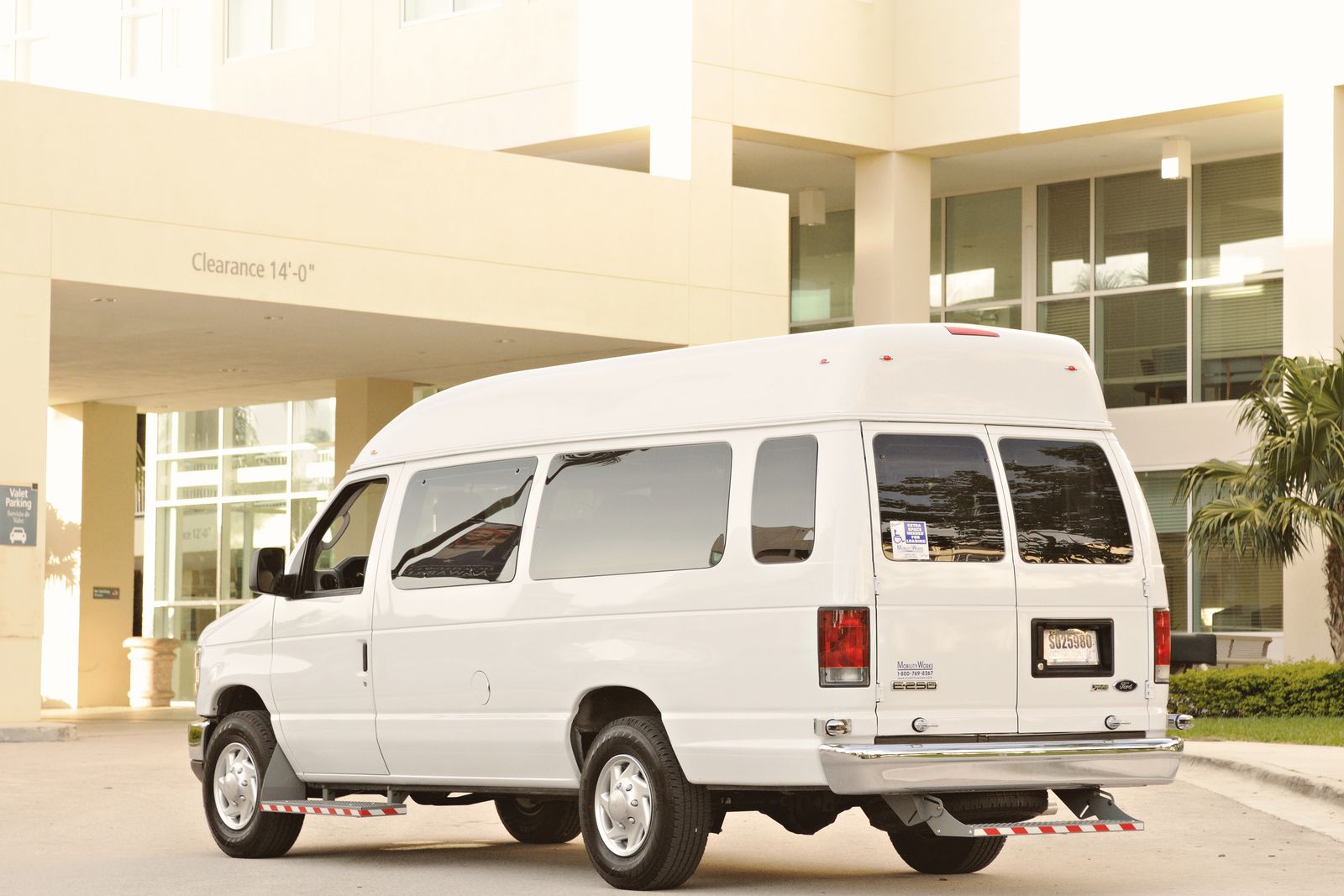
The director who cut 16 contracts to five
Keep scrolling. Every story below is from a public meeting or a public record.
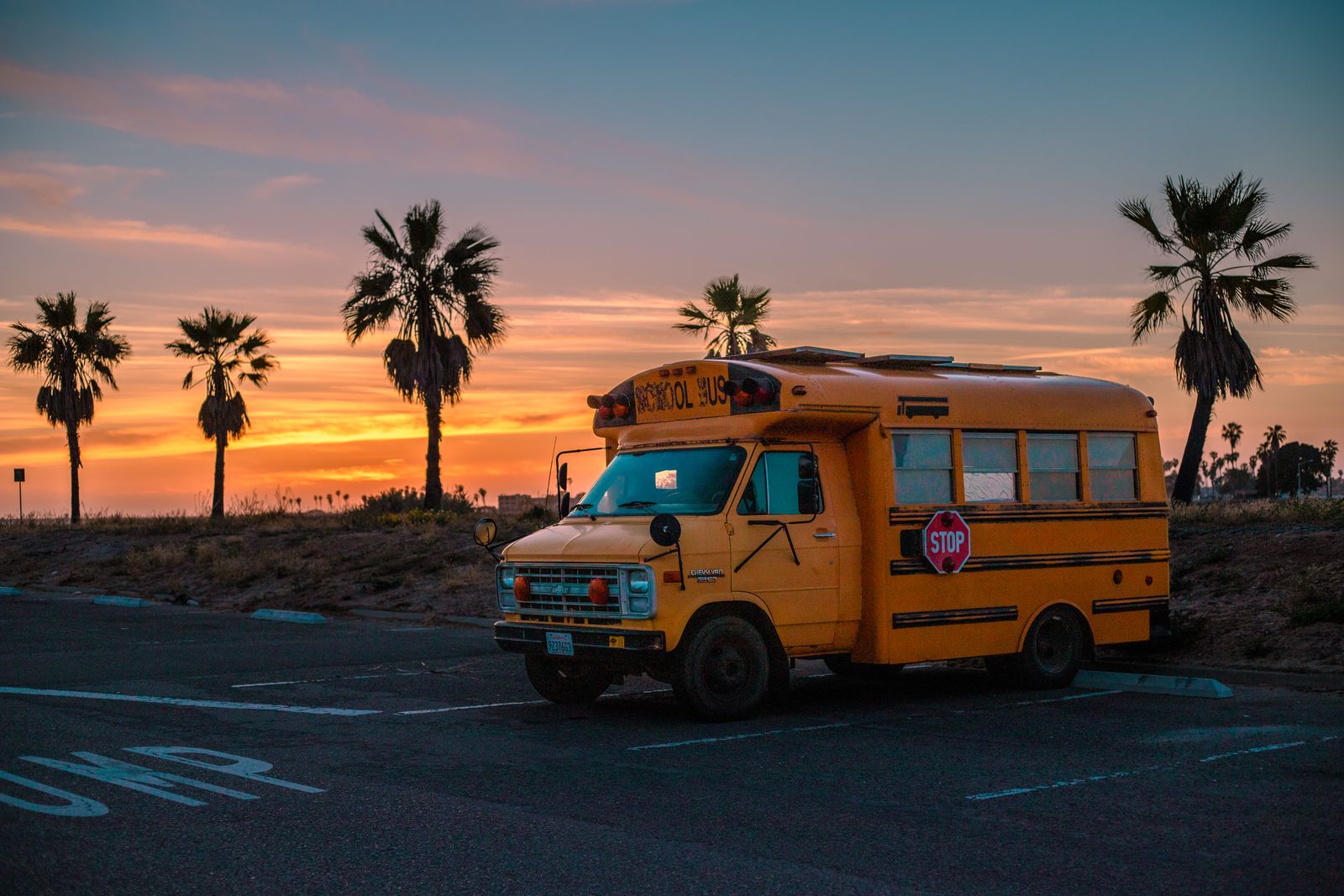

We transported 16 students by alternative van, private contractor, at the highest rate of up to $320 per student per day.
In his first year he moved students onto district vans, negotiated a sibling discount, put parents on formal contracts above the state payment-in-lieu rate and rebid the rest. 16 contracts became 12, then 10, then five. "Whenever we are using our vans, it is a significant savings to the district."3413
Special education pickup and drop-off times have significantly improved compared to previous years, reducing missed instructional time and improving service for students. This is a game changer.
Before the 2026-27 redesign, special education pickups started as early as 6:00 a.m. for a 7:30 a.m. bell, and some students left class before the day ended to make the afternoon run. The district asked the BusRight Solutions team to rebuild its K-8, special education and McKinney-Vento routes with one stated goal, less reliance on third-party contractors, and its staff called the reroute the district's first true transportation launch. Disclosure: BusRight is Balsz's routing partner, so this is an outcome we own.1
Where a district owns the problem, with a coordinator, a van and a router who can see the IEP data, the cost comes down and the ride gets shorter. Where the problem is handed to a contract, the district pays by the student-day and finds out about the ride time from a parent. More stories, from Nashoba Regional in Massachusetts, Blaine County, Idaho and Chester County, South Carolina, are in The record.
Next chapter07 What works, from inside the routing office
What works, from inside the routing office
The BusRight Solutions team routes more than 35,000 students across 12 states, and its analysts started as a special education aide, a transportation director and a contractor's dispatcher. This is what they do on a special education route.
Nothing in this chapter changes who qualifies for a ride. The IEP team decides that, and it should. What the BusRight Solutions team changes is how much of the IEP is visible to the person building the route, and how much of the route is visible to the person driving it. When the IEP data is current, routing 300 students is a day's work. When it is not, the first two weeks of school are spent finding out which bus has the lift.1
I could ramble on for hours about the amount of contracted vendors making fortunes off of districts. It happened to me in Massachusetts while I was a transportation director.Evan SchwartzTransportation Solutions Analyst, BusRight Solutions; former Transportation Director, Medford Public Schools, MassachusettsBusRight Solutions team discussion, Aug. 20261
Get the IEP data to the router before day one.
BusRight syncs the fields that drive a special education route straight from the student information system: IEP and 504 status, wheelchair, harness, car seat, bus aide, curb-to-curb, extended school year, McKinney-Vento and foster care. Once the fields are on the student, the router can filter the map to the students who need them, and load time goes in the same place: seven minutes for a wheelchair, built into the stop rather than carried in the driver's head.1
Route the least restrictive ride.
Greenville County, South Carolina puts 88% of its riders with disabilities on general education buses.59 In Poughkeepsie, New York, the BusRight Solutions team redesigned the routing plan with the district's contractor and, where the IEP allowed, included students with less-intensive needs on general education routes; the district went from a projected 26 contracted buses to about 19 while adding more than 400 students, with no new vehicles.1
Where appropriate, Amber also supported including students with less-intensive special education needs on general-education routes. The result: fewer buses, lower costs, and greater student inclusion.BusRight Solutions engagement summaryPoughkeepsie City School District, New York, with First Student. Amber Monserrate, BusRight SolutionsAug. 20251
This is an IEP team decision, and the transportation director belongs in that meeting with the data on ride time, equipment and cost.60 Directors at the 2026 TSD Conference said the same: Rockwall ISD's Jennifer Gardella wants transportation at the table when monitors or safety equipment are assigned in an IEP, and Allen ISD's Karol Day says transportation has to get route limits and travel times to IEP teams before the meeting, because attending every one is impractical.1817
Keep the short runs in-house. Contract the outliers on purpose.
A California district where about 85% of riders are in special education keeps its own students on its own buses and contracts only the overflow.1 The in-house van wins on more than price: a staff driver without a CDL is the same face every morning, and for many students with IEPs the same face is the accommodation.351 The outlier trips are what rideshare and van contracts are for. Read the rate card line by line.61
Report the mileage like money, because it is.
New Jersey's transported-student report, Arizona's 100th-day report, Washington's STARS filing and Texas's eligible-rider report all turn special education and McKinney-Vento ridership into state aid, and all of them are audited.1 Greenville County's director calculated that a district its size could expect about $221,000 a year in Medicaid reimbursement for transportation to IEP services at the old $13.35 per-trip rate, which has since more than doubled to $29.06.59 Route history works the other way too: Pickerington, Ohio asked the BusRight Solutions team to take the daily routing load so its own staff could focus on resolving federal IEP complaints.1
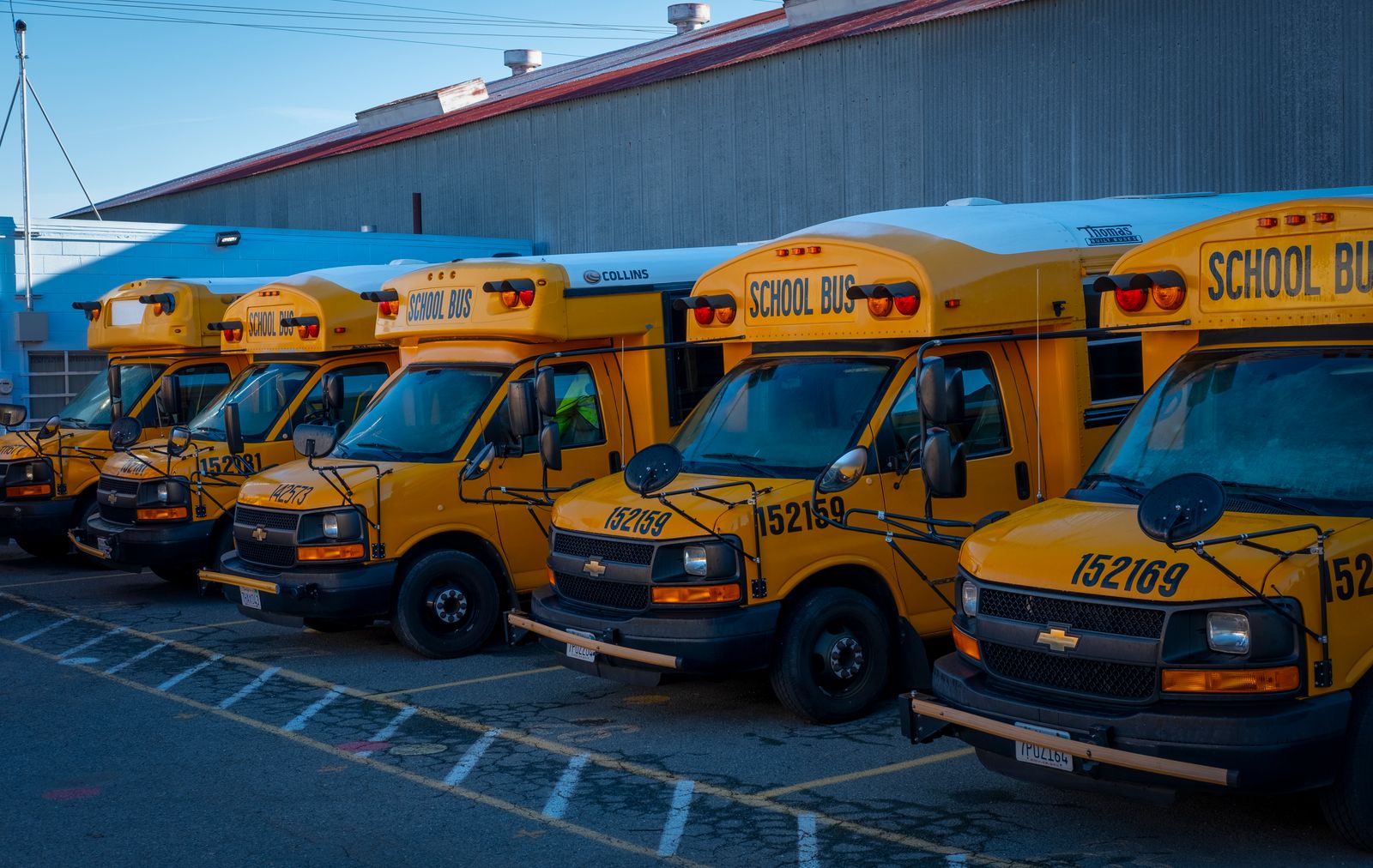
private van contracts in Riverside, Ohio, in one school year, after a new director moved students onto district vans and put parents on formal contracts. The old rate was up to $320 per student per day.

Eight moves. Check off the ones you have already made.
Your checklist stays in this browser. Nobody else sees it.
Or download the checklist.A printable version of all eight moves, plus the three-field data request to send your special education office.
Count the outliers
List every special education, McKinney-Vento and foster care rider by destination, vehicle and cost. Find the 17 students who are half the bill.
Get three fields every semester
Equipment, aide requirement and stop type, from the special education office, at every IEP cycle and every mid-year placement.
Write curb to curb unless the IEP says otherwise
The words carry legal weight. Match the stop type in the routing system to the words in the IEP.
Put load time in the route
Seven minutes for a wheelchair is seven minutes. If it is not in the stop, it is in the ETA and the driver's paid time.
Route the least restrictive ride
Bring ride time, equipment and cost to the IEP meeting. Where the team agrees, the general education bus is the inclusive option and the cheaper one.
Keep short runs in-house, contract outliers on purpose
A district van and a non-CDL driver beat a $320-a-day contract for the in-district run. Read every rate card line by line.
Give subs and aides the roster, keep the map private
Who gets off where, what they need, and no McKinney-Vento stops on the public map.
Report mileage like money
State reports, Medicaid claims and the IEP complaint log all run on the same route history. Keep it in one system, and check the reimbursement table in chapter 05 against what your district filed last year.

See what BusRight Solutions can do for your special education routes
Bring your rider list, your contracts and your ride times. We will walk the routes with you and show you what the data looks like when the IEP fields are in the system.
Book a routing review (includes a platform walkthrough)
Not ready to talk yet? Read about BusRight Solutions first, read the companions to this paper, The rulebook, 2025-26 and The record, or read Running Short, our white paper on the driver shortage.
We're building toward a future where no child's learning is limited by how they get there, through smarter solutions and partners united in that same vision.
Back to top